Centres de Recerca de Catalunya (CERCA)

L’ICIQ és una fundació del sector públic dedicada a la recerca en química que afronta grans reptes globals com l’emergència climàtica, la transició energètica i la salut de les persones. Des del 2014, ha estat distingit amb tres acreditacions d’excel·lència Severo Ochoa, consolidant-se com a centre de referència en catàlisi sostenible, energies renovables i medicina molecular. Amb seu a Tarragona, l’ICIQ compta amb més de 300 professionals —més de 260 dels quals es dediquen directament a la recerca—, distribuïts en 19 grups de recerca que desenvolupen projectes científics d’avantguarda combinant metodologies experimentals i computacionals. El centre ha obtingut 26 ajuts del Consell Europeu de Recerca (ERC), i nou dels seus investigadors i investigadores principals son professors i professores ICREA (Institució Catalana de Recerca i Estudis Avançats). L’ICIQ col·labora activament amb el món acadèmic i la indústria per transferir tecnologia, promoure aplicacions innovadores i formar talent científic al llarg de totes les etapes de la carrera investigadora, d’acord amb el segell europeu d’excel·lència en recursos humans (HRS4R). Com a centre CERCA i membre fundador del BIST, l’ICIQ està compromès amb la ciència oberta, la sostenibilitat, la igualtat d’oportunitats i l’impacte social de la recerca. Més informació a www.iciq.cat © 2025. Tots els drets reservats.
Si sou autor/a d’algun document elaborat en l’àmbit de l'Institut Català d'Investigació Química (ICIQ) i voleu publicar-lo a RECERCAT, contacteu amb iciqcommunication@iciq.es

Indium–zirconium oxides rank among the most selective and stable catalysts for CO2 hydrogenation to methanol. Yet, despite extensive research, the mechanistic origin of the exceptional role of monoclinic zirconia remains ...
Self-healing polymers promise extended lifetimes, improved sustainability, and reduced maintenance costs. These attributes are particularly valuable in protective coatings. Here, we introduce a new class of healable ...
The design of catalysts gets its fundamental rationale from accurate and efficient modeling of reactivity on surfaces and materials. To reach this detailed atomistic understanding, density functional theory (DFT) has been ...
Electrochemical CO2 reduction (CO2R) in acid may enable high carbon utilization but faces selectivity challenges, particularly from the Hydrogen Evolution Reaction (HER). While the source of protons and cation concentrations ...
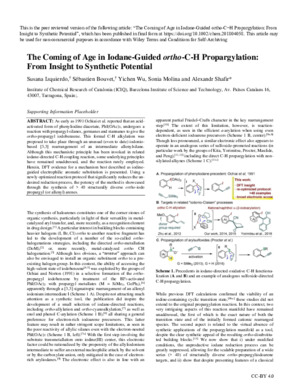
As early as 1991 Ochiai et al. reported that an acid-activated form of phenyliodine diacetate, PhI(OAc)2, undergoes a reaction with propargyl-silanes, germanes and stannanes to give the ortho-propargyl iodobenzene. This ...
Rapid detection of antibiotic-resistant bacteria is a crucial tool in the global fight against antimicrobial resistance, helping to limit the spread of resistance and guide treatment decisions. Here, we report the design, ...
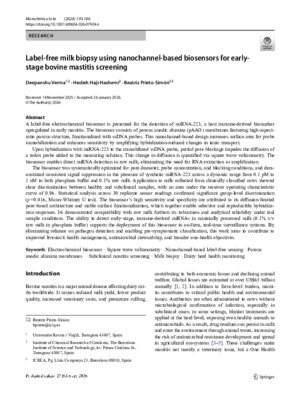
A label-free electrochemical biosensor is presented for the detection of miRNA-223, a host immune-derived biomarker upregulated in early mastitis. The biosensor consists of porous anodic alumina (pAAO) membranes featuring ...
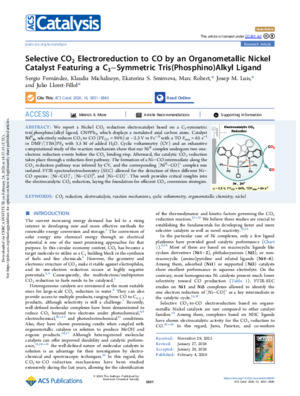
We report a Nickel CO2 reduction electrocatalyst based on a C3-symmetric tris(phosphino)alkyl ligand, CNPPh3, which displays a metalated axial carbon atom. Catalyst NiHBr selectively reduces CO2 to CO (FYCO = 94%) at −2.3 ...
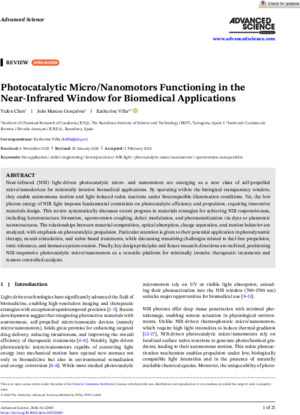
Near-infrared (NIR) light-driven photocatalytic micro- and nanomotors are emerging as a new class of self-propelled micro/nanodevices for minimally invasive biomedical applications. By operating within the biological ...
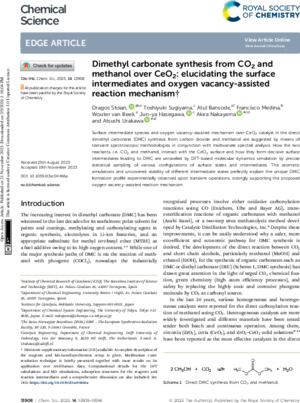
Surface intermediate species and oxygen vacancy-assisted mechanism over CeO2 catalyst in the direct dimethyl carbonate (DMC) synthesis from carbon dioxide and methanol are suggested by means of transient spectroscopic ...
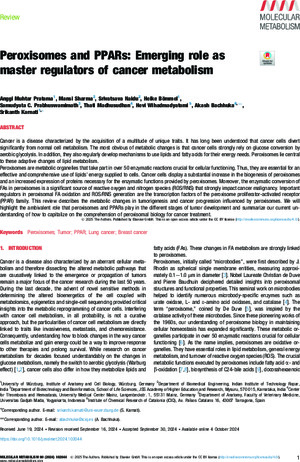
Cancer is a disease characterized by the acquisition of a multitude of unique traits. It has long been understood that cancer cells divert significantly from normal cell metabolism. The most obvious of metabolic changes ...
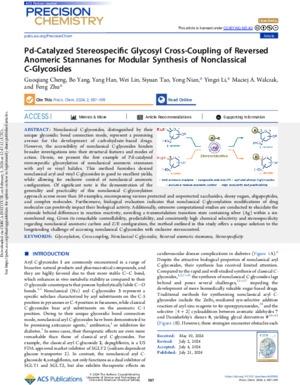
Nonclassical C-glycosides, distinguished by their unique glycosidic bond connection mode, represent a promising avenue for the development of carbohydrate-based drugs. However, the accessibility of nonclassical C-glycosides ...
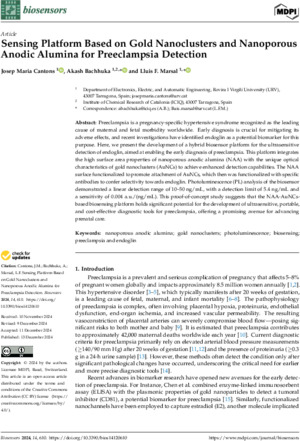
Preeclampsia is a pregnancy-specific hypertensive syndrome recognized as the leading cause of maternal and fetal morbidity worldwide. Early diagnosis is crucial for mitigating its adverse effects, and recent investigations ...
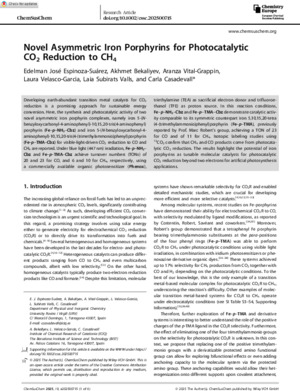
Developing earth-abundant transition metal catalysts for CO2 reduction is a promising approach for sustainable energy conversion. Here, the synthesis and photocatalytic activity of two novel asymmetric iron porphyrin ...
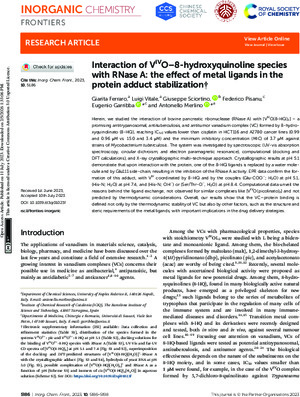
Herein, we studied the interaction of bovine pancreatic ribonuclease (RNase A) with [VIVO(8-HQ)2] – a promising antitrypanosomal, antituberculosis, and antitumor vanadium complex (VC) formed by 8-hydroxyquinolinato (8-HQ), ...
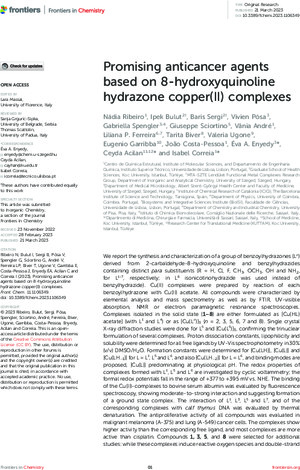
We report the synthesis and characterization of a group of benzoylhydrazones (Ln) derived from 2-carbaldehyde-8-hydroxyquinoline and benzylhydrazides containing distinct para substituents (R = H, Cl, F, CH3, OCH3, OH and ...
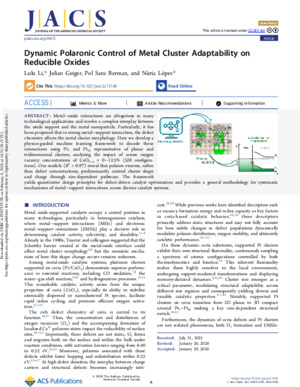
Metal–oxide interactions are ubiquitous in many technological applications and involve a complex interplay between the oxide support and the metal nanoparticle. Particularly, it has been proposed that in strong metal–support ...
Photocatalytic hydrogen (H2) production with 2D Ruddlesden–Popper tin-iodide perovskites has recently emerged as a promising route toward sustainable solar-to-fuel conversion. However, a major limitation of these systems ...
The manufacture of a novel type of gas diffusion electrode (GDE) for the electroreduction of CO2, based on nanoporous anodic alumina gas diffusion layers (GDLs), is described. The GDE consists of an array of aligned pores ...
Photosynthesis relies on highly organized pigment–protein complexes in order to store sunlight energy as biochemical energy. These complexes capture light with remarkable efficiency and are responsible for ultrafast charge ...


